Customer Use Cases
SafeKit Use Cases
SafeKit for OEM
Offering high availability with your application increases business value by ensuring continuous service, reducing downtime risks, and enhancing customer trust, while enabling critical operations to run without interruption on standard infrastructures.
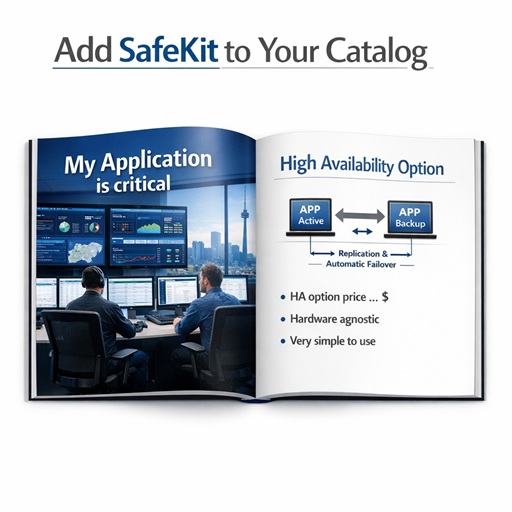
Add SafeKit in your catalog as a high availability option: a software-only solution tailored to your application, with no hidden costs such as shared storage, fully hardware-agnostic, and deployable on physical, virtual, or cloud environments, with simple plug-and-play administration.
SafeKit for Edge
Edge sites often have no data center and no HA expertise—yet business continuity is critical. SafeKit keeps edge applications running in factories, oil platforms, ships, building security, air traffic control, 5G networks, healthcare, retail…
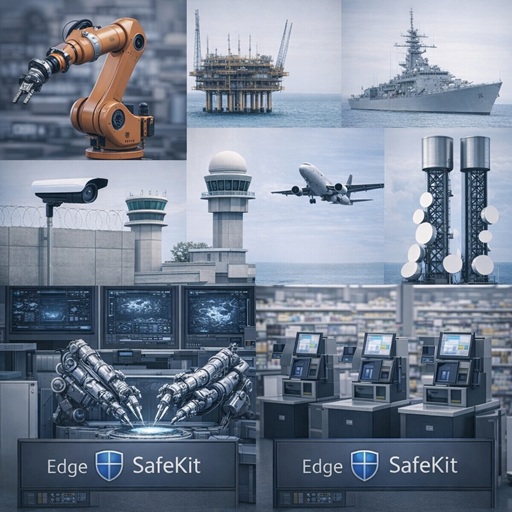
SafeKit turns two standard edge servers (any brand) into a plug‑and‑play HA cluster—no shared storage/SAN. One lightweight stack delivers real‑time replication and automatic failover (and can also include load balancing), easy to install and administer.
SafeKit for VMS
Video Management Software (VMS) is critical to public safety, recording and displaying live and archived video so security officers can react instantly to incidents. Any VMS outage directly puts people and assets at risk.
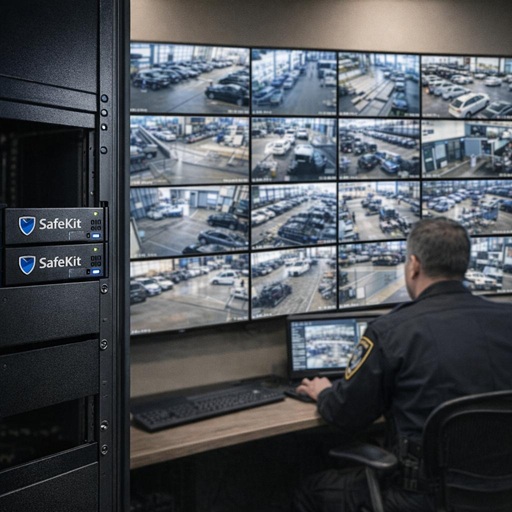
SafeKit prevents video loss and monitoring gaps by maintaining continuous access to live and recorded streams, even during server or software failures. It integrates seamlessly with leading VMS platforms such as Milestone, Genetec, Hanwha , and others to keep surveillance operational when it matters most.
SafeKit for EACS
Electronic Access Control Systems (EACS) are essential to physical security, controlling and monitoring access to private and sensitive areas through doors, badges, readers, and sensors. Any system outage can immediately expose people, buildings, and assets to intrusion.
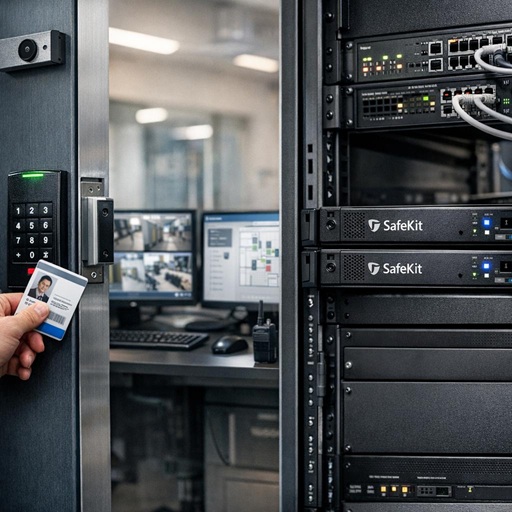
SafeKit keeps access control decisions, alarms, and credentials available at all times by eliminating single points of failure. It delivers resilient operation for EACS solutions such as Hirsch Microsesame, Nedap AEOS, and Siemens SiPass , ensuring secure access even during infrastructure incidents.
SafeKit for SCADA
SCADA (Supervisory Control and Data Acquisition) systems are at the core of industrial environments, enabling operators to monitor and control critical processes through sensors, valves, pumps, motors, and human‑machine interfaces.
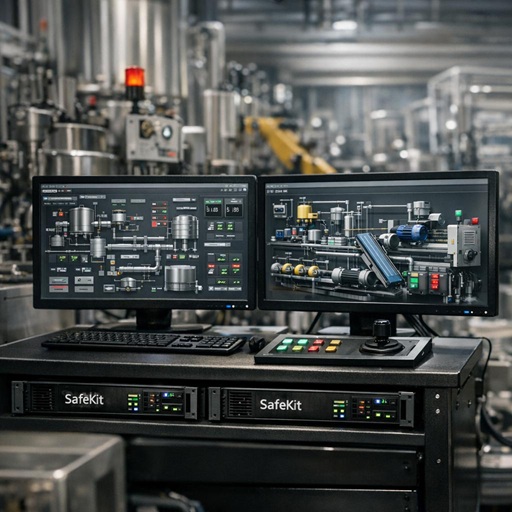
SafeKit minimizes production downtime by ensuring SCADA control systems—such as those powering Probat coffee roasters and ALSTEF baggage sorting machines —remain operational despite hardware or software incidents. This allows operators to retain full visibility and control of industrial processes at all times, preventing costly shutdowns and safety risks.
SafeKit for BMS
Building Management Systems (BMS) are central to modern buildings, providing automated control of HVAC, electrical distribution, lighting, fire safety, and water systems. Any system outage can directly impact occupant safety, comfort, and building operations.
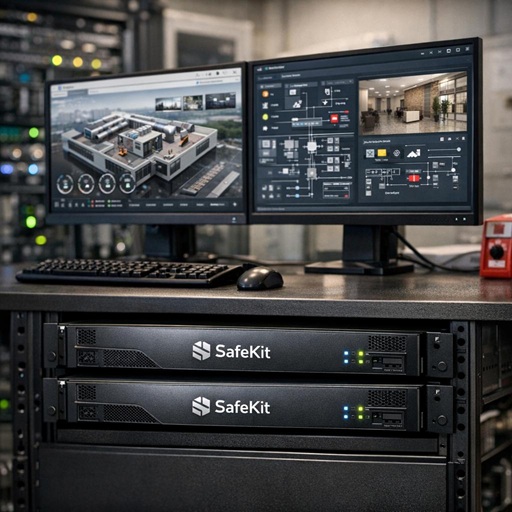
SafeKit safeguards building automation by allowing BMS services to continue running transparently in the event of a failure. It supports platforms such as Siemens Desigo CC, Bosch BIS , and related systems to maintain safe, efficient, and uninterrupted building operations.
SafeKit for ATC
Air Traffic Control (ATC) systems are critical to aviation safety, enabling real‑time monitoring and control of aircraft movements on the ground and in the air through surveillance, guidance, and control applications.
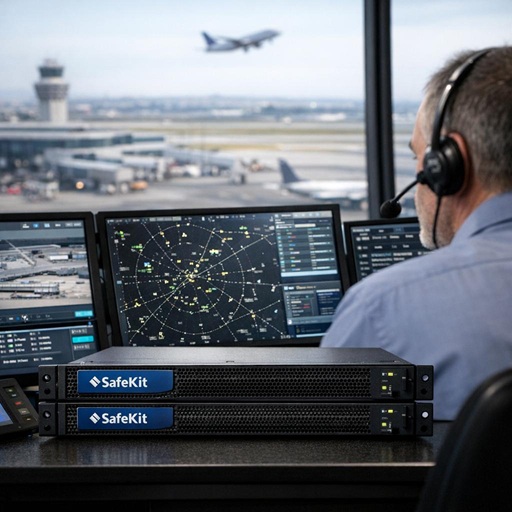
SafeKit reinforces ATC system resilience by guaranteeing uninterrupted controller access to critical airside applications. It is used with ATC and airport solutions such as ADB SafeGate to support safe, continuous air traffic operations under all conditions.
SafeKit for OCC
Operations Control Centers (OCC) are at the heart of modern metro networks, centralizing supervision of train movements, power supply, signaling, passenger information, and incident management. In automated driverless metro lines, the OCC is the single point of control for operations.
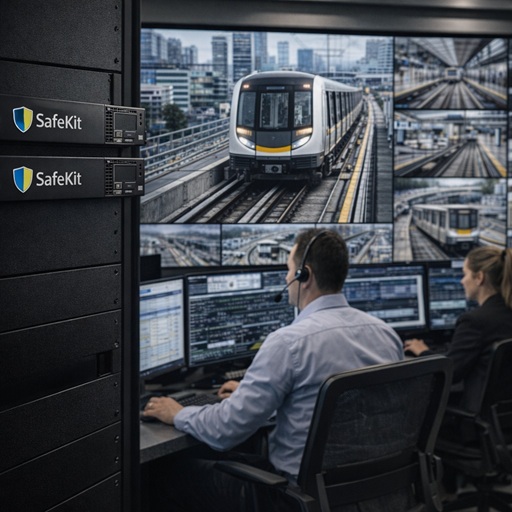
SafeKit secures uninterrupted supervision of metro lines by ensuring OCC applications remain available during failures. It supports Operations Control Centers for automated, driverless Paris metro lines , enabling continuous service and rapid incident response without reliance on onboard drivers.
🔍 Explore SafeKit
Find information about SafeKit features, architectures, videos, documentation, and the free trial.
| Resource | Description | Link |
|---|---|---|
| Key features | Learn why SafeKit is a simple and cost-effective high availability solution. | Discover the key features |
| Use cases | Learn how SafeKit keeps critical applications and infrastructure available. | Explore the use cases |
| Deployment model | SafeKit provides high availability without a SAN or shared storage. | Explore the deployment model |
| High availability strategies | Compare high availability for virtual machines with high availability for applications. | Compare the two strategies |
| Technical specifications | Check the technical requirements and limitations for SafeKit clusters. | Read the technical specifications |
| Videos | Watch demonstrations of SafeKit configuration and automatic failover. | Watch the technical videos |
| Architecture | Learn how the SafeKit Mirror cluster replicates files in real time and handles failover. | Explore the Mirror architecture |
| Architecture | Learn how the SafeKit Farm cluster balances network traffic and handles failover. | Explore the Farm architecture |
| Product comparison | Compare SafeKit with traditional high availability clusters. | Compare the solutions |
| Technical resources | Find technical documentation, download SafeKit, and access the free trial. | Access the documentation and free trial |
| Application modules | Use preconfigured SafeKit modules to set up high availability for your applications. | Explore the application modules |