---
title: "Best and Worst High Availability Use Cases: A SafeKit Implementation Guide"
canonical: "https://safekit.eviden.com/use-cases/best-worst-use-cases-high-availability/"
description: "Identify the best and worst use cases for high availability. Learn where SafeKit excels in software-defined clustering for Windows and Linux, and discover when traditional shared-storage or hardware-based HA might fail your business."
category: "use-cases"
lang: "en"
topics: "Best use cases of SafeKit high availability, Worst use cases of SafeKit high availability, SafeKit High Availability Limitations"
---
# Best and Worst High Availability Use Cases: A SafeKit Implementation Guide
## Best use cases of SafeKit high availability
### OEM Software
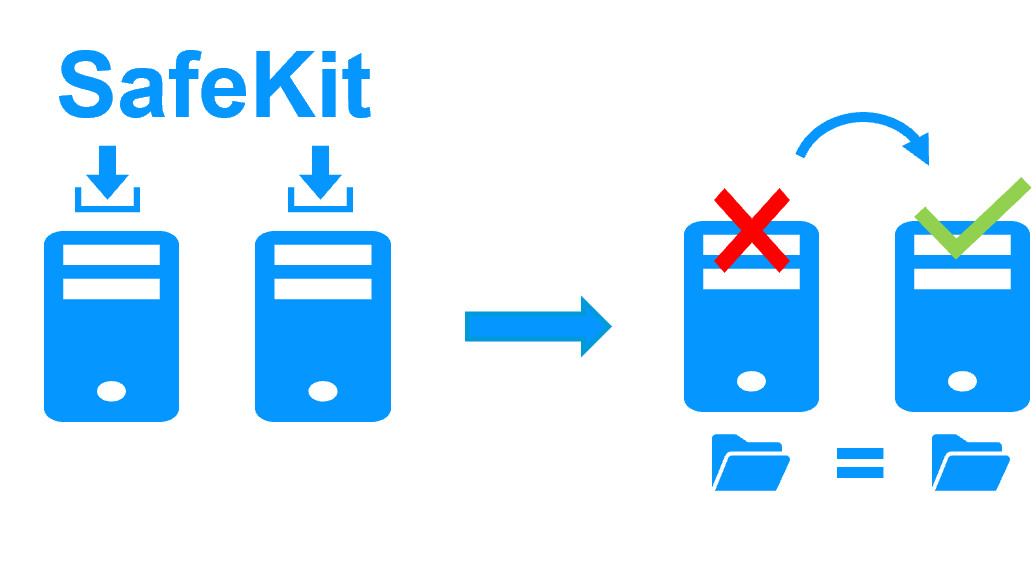
A software publisher uses [SafeKit as an OEM software]() for high availability of its application
### Distributed Enterprise
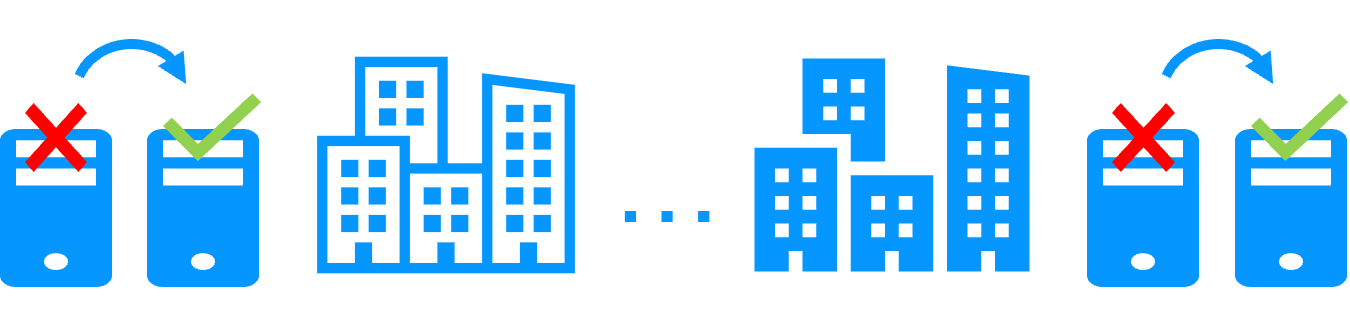
A distributed enterprise deploys [SafeKit in many branches]() without specific IT skills
### Remote Sites
[SafeKit is deployed in two remote sites]() without the need for replicated bays of disks through a SAN.

## Worst use cases of SafeKit high availability
## SafeKit High Availability Limitations {#safekit-ha-limitations}
Limit / Requirement | Reason & Impact | Recommended Alternative
---|---|---
Replication size: A few TBs | Resynchronization time after failure ([step 3](https://safekit.eviden.com/architectures/file-replication-byte-level-with-failover-mirror-cluster/#safekit-mirror-cluster)):
• 1 Gb/s network ≈ 3 hours / TB
• 10 Gb/s network ≈ 1 hour / TB (depending on disk write performances) | • Use [external shared storage](https://safekit.eviden.com/best-practises/san-vs-nas-shared-storage-for-a-failover-cluster/) (more expensive, more complex).
File count: < 1,000,000 files | • Resynchronization time performance after a failure ([step 3](https://safekit.eviden.com/architectures/file-replication-byte-level-with-failover-mirror-cluster/#safekit-mirror-cluster)).
• Time to check each file between both nodes. | • Put the many files to replicate in a virtual hard disk / virtual machine.
• Only the files representing the virtual hard disk / virtual machine will be replicated and resynchronized in this case.
Failover capacity: ≤ 32 VMs | • Each VM runs in an independent mirror module.
• Maximum of 32 mirror modules running on the same cluster. | • Use an external shared storage and another VM clustering solution (more expensive, more complex).
Network architecture: LAN/VLAN network between remote sites | • Automatic failover of the [virtual IP address](https://safekit.eviden.com/best-practises/how-a-virtual-ip-address-works/) with 2 nodes in the same subnet.
• Good bandwidth for resynchronization ([step 3](https://safekit.eviden.com/architectures/file-replication-byte-level-with-failover-mirror-cluster/#safekit-mirror-cluster)) and good latency for [synchronous replication](https://safekit.eviden.com/best-practises/synchronous-replication-vs-asynchronous-replication/) (typically a round-trip of less than 2ms). | • Use a [load balancer for the virtual IP address](https://safekit.eviden.com/best-practises/how-a-virtual-ip-address-works/) if the 2 nodes are in 2 subnets (supported by SafeKit, especially in the cloud).
• Use backup solutions with asynchronous replication for high latency network.